Whitepaper
Very few industrial clients can shut their doors while an upgrade happens. Production has to keep moving, trucks still need to load and staff still need to get to work safely. That means the construction is only half the job. The other half is planning how the work fits around a business that never stops.
Start with how the site actually runs
Before any program is written, we spend time understanding the operation. Shift patterns, peak periods, delivery windows, forklift routes, critical plant and the areas that simply cannot be interrupted. This is usually where the biggest risks show up, and where the best opportunities for staging are found.
Stage the work, not just the build
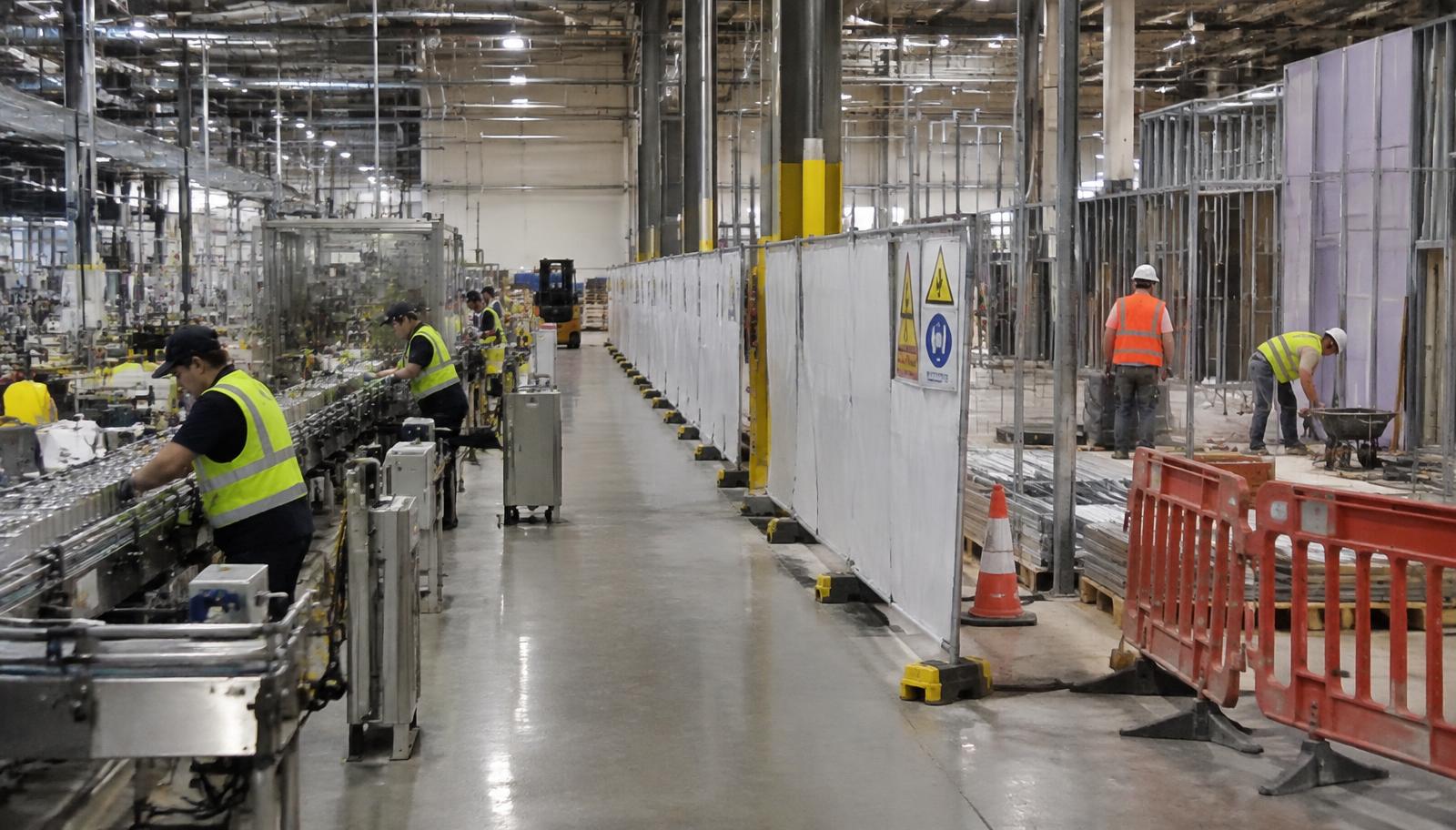
Breaking a project into clear stages lets the facility keep operating while each section is completed and handed back. A good staging plan answers a few simple questions: what gets done first, what stays live, where people and vehicles move during each stage and how each area is returned to service.
Separate work zones from live areas with hoarding, barriers and clear signage.
Keep construction traffic and deliveries apart from forklift and pedestrian routes.
Plan temporary services so power, air and water stay available to the operation.
Hand back finished areas progressively instead of all at the end.
Use shutdowns wisely
Some tasks cannot be done safely around a running operation. Tie-ins to main services, roof work over production areas, slab cuts and heavy lifts are typical examples. These should be grouped and scheduled into planned shutdowns, weekends or holiday periods, with materials and crews ready to go so the shutdown window is used fully.
Safety with two workforces on one site
When construction workers and operational staff share a site, everyone needs to understand where they can and can't go. Site inductions, permit systems, daily coordination and clear communication between the builder and the site manager make the difference. Dust, noise and vibration also need managing, particularly in food, pharmaceutical and other sensitive environments.
Communication is the program
The projects that run smoothly are the ones with no surprises. A single point of contact, a short weekly look-ahead and early notice of any noisy or disruptive work let the operations team plan around it. Problems are raised early, while they are still small.
The bottom line
Upgrading a live facility is entirely achievable with the right planning. Stage the work around the operation, save high-impact tasks for planned shutdowns, separate people and plant, and keep the conversation going. The result is a better facility delivered with as little disruption as possible to the business that depends on it.